*Disclaimer: Study in Asia is a consulting service.

Study in Asia is your guide to the world of international education. We have compiled a broad catalog of universities around the world, including China, Japan, Korea, and other countries.
Korea Advanced Institute of Science and Technology (KAIST) is a multidisciplinary educational institution. Choose the direction and study program that are perfect for you.
KAIST (Korea Advanced Institute of Science and Technology) is a national research university in Daejeon, South Korea, and the country's first research-oriented science and technology institution. It was founded in 1971 to train the scientists and engineers needed for Korea's industrialization and today is one of Asia's leading universities in engineering, natural sciences and computing.
KAIST is organized into colleges of Natural Sciences, Life Science and Bioengineering, Engineering, Liberal Arts and Convergence Science, and Business, plus a number of graduate schools (AI, data science, information security, semiconductors, mobility and others). All programs except the MBA programs are taught on the main campus in Daejeon. English is the official language of instruction and communication for international students, so Korean (TOPIK) is not required for admission.
Program | Application period | Results |
|---|---|---|
Bachelor, Early Admissions (Spring or Fall 2027 entry) | September 22 – October 22, 2026, 6:00 PM KST; recommendation letter by October 29, 2026 | January 7, 2027 |
Bachelor, Regular Admissions (Fall 2027 entry only) | November 10, 2026 – January 14, 2027, 6:00 PM KST; recommendation letter by January 21, 2027 | March 25, 2027 |
Master's and Ph.D., Fall 2027 Early Track | expected December 2 – December 16, 2026 | expected March 2027 |
Master's and Ph.D., Fall 2027 Regular Track | expected March 3 – March 17, 2027 | expected June 2027 |
Bachelor studies start at the end of February 2027 (Spring) or the end of August 2027 (Fall). Online interviews are held only if needed (December 22, 2026 for Early, March 3, 2027 for Regular).
KAIST's main campus is in Daejeon, inside Daedeok Innopolis, Korea's largest research and science cluster. All colleges and programs except the MBA programs operate on the Daejeon campus; the College of Business has its own campus in Seoul.
All KAIST students can live in the on-campus dormitories, and dorm fees are low compared with other Korean universities. Rooms are for one, two or three people and are furnished with a bed, desk, chair and closet for each student.
Option | Price |
|---|---|
Hee Mang Hall, two-person room (undergraduate reference) | 166,000 KRW per month |
All dormitories, depending on single or 2–3 person room | 94,000–280,000 KRW per month |
Item | Per year | Note |
|---|---|---|
Tuition | 6,866,000 KRW | Covered by the KAIST Scholarship |
National health insurance | 916,680 KRW | 76,390 KRW per month |
Books | 300,000 KRW | About 3 courses per semester |
Housing | 1,328,000 KRW | Hee Mang Hall, 2 people, 4 months per semester |
Food | 5,475,000 KRW | Campus cafeteria, about 5,000 KRW per meal |
Student Health Insurance Association | 93,000 KRW | 48,000 KRW first semester, 45,000 KRW second |
Mobile phone | 360,000 KRW | About 30,000 KRW per month |
KAIST Scholarship stipend | minus 4,200,000 KRW | 350,000 KRW × 12 months |
Out-of-pocket after scholarship | about 3,359,000 KRW | About 279,917 KRW per month |
KAIST funds almost all of its international students: there is no separate scholarship application — applicants simply select «KAIST Scholarship» in the Statement of Financial Resources section of the admission form.
Type/class | For whom | What it covers |
|---|---|---|
KAIST Scholarship | All admitted international undergraduates | 100% tuition for 8 semesters, living allowance 350,000 KRW per month, national health insurance |
Type/class | For whom | What it covers |
|---|---|---|
KAIST Scholarship | International Master's, Master's-Ph.D. and Ph.D. applicants in all departments except GDI-GTIP | 100% tuition, national health insurance, monthly stipend depending on research involvement (amount varies by college) |
KAIST Global Presidential Scholarship (KGPS) | Highly competitive Master's and integrated Master's-Ph.D. applicants recommended by the department head | 100% tuition and 1,000,000 KRW per month for 4 regular semesters |
KAIST Prestige Scholarship (KPS) | Outstanding Ph.D. and integrated Master's-Ph.D. applicants (integrated students receive it from the start of the Ph.D.) | 100% tuition and 300,000 KRW per month for 8 regular semesters |
Type/class | For whom | What it covers |
|---|---|---|
GKS University Track and Embassy Track | International graduate applicants | Government of Korea scholarship under GKS rules |
KAIST was created in 1971 as Korea's first research-oriented graduate school of science and technology. Over five decades it grew into a full university with undergraduate and graduate programs and moved its main campus to Daejeon.
Year | Event |
|---|---|
1970 | Visit of Dr. Frederick Terman to Korea, the first step toward founding the institute |
1971 | Korea Advanced Institute of Science (KAIS) is founded at the Hongneung Campus in Seoul |
1973 | First master's students are admitted |
1980 | Merger with KIST forms the Korea Advanced Institute of Science and Technology (KAIST) |
1984 | Korea Institute of Technology (KIT) is founded in Daejeon, opening the undergraduate program |
1987 | KAIST's Daedeok campus is established |
1989 | KAIST and KIST separate; KAIST merges with KIT and relocates to Daejeon |
2009 | Merger with Information and Communications University (ICU) and with the Korea Science Academy (now Korea Science Academy of KAIST) |
2021 | KAIST celebrates its 50th anniversary |
KAIST is Korea's leading science and technology university and one of the top 100 universities in the world.
Ranking | Edition | Position |
|---|---|---|
QS World University Rankings | 2027 | 65 |
THE World University Rankings | 2027 | 64 (the highest in KAIST's history) |
ARWU (ShanghaiRanking) | 2026 | 201–300 |
KAIST was not included in the QS World University Rankings 2026 because of a one-year exclusion and returned in the 2027 edition. Korea has no official national university ranking comparable to China's BCUR.
English is KAIST's official language of instruction and communication for international students, and international students come from dozens of countries. Besides regular degree programs, KAIST runs several international graduate programs together with government agencies and international organizations.
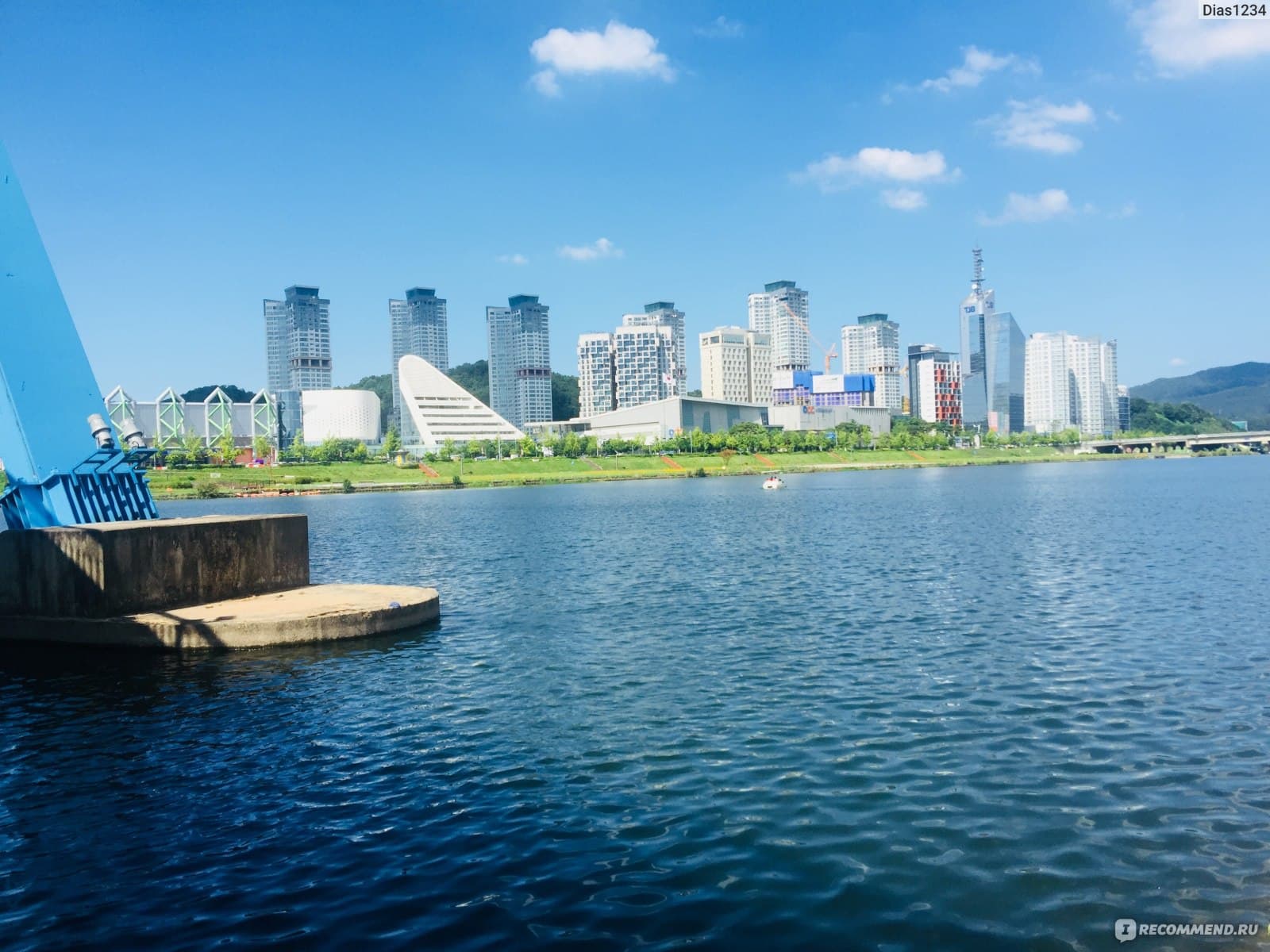
Тэджон — крупный научно-образовательный центр Южной Кореи, расположенный примерно посередине между Сеул и Пусан. Город известен как «корейская Силиконовая долина»: здесь много исследовательских институтов, технопарков и университетов.
Для студентов Тэджон — очень хороший вариант: высокий уровень безопасности, сильная академическая среда, меньше суеты, чем в Сеуле, и при этом отличное транспортное сообщение с другими городами.