*Disclaimer: Study in Asia is a consulting service.
Study in Asia is your guide to the world of international education. We have compiled a broad catalog of universities around the world, including China, Japan, Korea, and other countries.
Southeast University is a multidisciplinary educational institution. Choose the direction and study program that are perfect for you.
Southeast University (SEU) is a national key university in Nanjing directly administered by the Ministry of Education of China and co-built with Jiangsu Province. It belongs to the 985 and 211 projects and since 2017 is a Class A university of the Double First-Class initiative. SEU is a comprehensive research university with a strong engineering profile: architecture, civil engineering, transportation, electronics, communications, computer science and biomedical engineering are among its leading fields. International students are admitted to Chinese- and English-taught bachelor's, master's and PhD programmes and to Chinese language courses.
No. =335 in the QS World University Rankings 2027, No. 89 in ARWU 2026 (first time in the world top 100) and No. 15 in the Best Chinese Universities Ranking 2026.
12 Double First-Class disciplines, 8th in China; 18 disciplines in the ESI global top 1%, Engineering 13th and Computer Science 5th worldwide.
3,070 full-time faculty, 19 academicians of the Chinese Academies of Sciences and Engineering.
43,651 full-time students: 17,277 undergraduates and 26,256 postgraduates; 2,381 international students from over 100 countries, 1,688 of them degree students.
Bachelor's: 64 Chinese-taught and 6 English-taught programmes (architecture, urban planning, civil and transportation engineering, international economics and trade, clinical medicine MBBS).
Master's: 64 Chinese-taught and 21 English-taught programmes, including two fully funded YES-China programmes for professionals from Belt and Road countries.
PhD: 67 Chinese-taught and 40 English-taught specialities, 4 years.
Foundation 1+4: one-year pre-university programme in Chinese with intensive language and subject courses, then a Chinese-taught bachelor's.
Chinese language courses: one semester or longer, starting in March and September.
Programme | Chinese-taught, RMB per year | English-taught, RMB per year |
|---|---|---|
Bachelor's, arts and humanities | 16,000 | 30,000 |
Bachelor's, science and engineering | 19,000 | 33,000 |
Bachelor's, medicine | 20,000 | 50,000 |
Master's, liberal arts | 18,000 | 30,000 |
Master's, engineering | 23,000 | 33,000 |
Master's, medicine | 30,000 | 30,000 |
PhD, liberal arts | 28,000 | 33,000 |
PhD, engineering | 33,000 | 38,000 |
PhD, medicine | 50,000 | — |
Foundation 1+4 (first year) | 16,000 | — |
Chinese language courses | 16,000 (8,000 per semester) | — |
Other fees: application fee RMB 800 (non-refundable), insurance RMB 800 per year, accommodation RMB 9,000 per year for one bed in a double room.
Programme | Application period | Start of studies |
|---|---|---|
Bachelor's, batch 1 | November 2026 – February 2027 | September 2027 |
Bachelor's, batch 2 | March – May 2027 | September 2027 |
Bachelor's, batch 3 | June 2027 | September 2027 |
Master's and PhD, self-funded | November 2026 – May 2027 | September 2027 |
Master's and PhD, CSC Type B High-level Graduate Program | November 2026 – February 2027 | September 2027 |
Master's and PhD, CSC Type B Silk Road Program | March – May 2027 | September 2027 |
Master's and PhD, SEU Scholarship | November 2026 – February 2027 (batch 1), March – May 2027 (batch 2) | September 2027 |
YES-China master's (CSC Type A) | until mid-March 2027 (expected) | September 2027 |
Foundation 1+4 | mid-March – mid-July 2027 | September 2027 |
Chinese language courses, spring | September – December 2026 | March 2027 |
Chinese language courses, autumn | March – June 2027 | September 2027 |
Chinese-taught programmes: HSK 4 with at least 200 points; HSK 5 (200+) for medicine, economics and management, humanities and International Chinese Language Education.
English-taught programmes: TOEFL 80, IELTS 6.0 or Duolingo 100; applicants from countries where English is an official or native language are exempt. Some programmes may set higher requirements.
HSK is also a graduation requirement: HSK 5 for Chinese-taught and HSK 4 for English-taught bachelor's; HSK 5 for Chinese-taught and HSK 3 for English-taught master's.
Age: bachelor's from 18 with a completed secondary education; master's under 35 with a bachelor's degree; PhD under 40 with a master's degree; YES-China programmes under 45 with at least 3 years of relevant work experience.
All bachelor's applicants submit an official CSCA (Chinese Scholastic Competence Assessment) score report. The required subjects depend on the major:
CSCA subjects | Majors |
|---|---|
Science Chinese + Mathematics + Physics | most engineering, computing and science majors taught in Chinese |
Science Chinese + Mathematics + Chemistry | Chemistry, Chemical Engineering, Pharmaceutical Engineering, Preventive Medicine, Labor and Social Security, Clinical Medicine, Medical Imaging |
Science Chinese + Mathematics | Mathematics and Applied Mathematics, Information and Computational Science, Statistics |
Humanities or Science Chinese + Mathematics | Architecture, Urban Planning, Landscape Architecture, E-Business, Logistics Management, Business Administration, Accounting, International Economics and Trade |
Humanities Chinese + Mathematics | English, Japanese, Law, humanities and arts majors |
Mathematics | Architecture, Urban Planning and International Economics and Trade taught in English |
Mathematics + Physics | Civil Engineering and Transportation Engineering taught in English |
Mathematics + Chemistry | Clinical Medicine (MBBS) taught in English |
Admission is based on document review, written examinations and interviews, with an overall assessment of each applicant.
Stages: initial review, payment of the application fee, academic review by the school, final result. Applicants who pass all reviews may be nominated for the Chinese Government Scholarship or other scholarships.
Each applicant chooses only one track: Chinese Government Scholarship, SEU Scholarship or self-funded; duplicate applications are not reviewed. Self-funded applicants confirm their place by paying the first-year tuition (bachelor's) or tuition and accommodation (master's and PhD).
Registration is from late August to early September 2027; students enter China on an X1 student visa issued on the basis of the admission notice and the JW201/JW202 form.
SEU has three main campuses, Jiulonghu, Sipailou and Dingjiaqiao, with a total area of about 392 hectares, plus SEU Wuxi and the SEU Suzhou Research Institute.
Rooms are double: RMB 9,000 per year for one bed in a double room. Each room has its own bathroom, water heater and air conditioning; shared laundry rooms are in the buildings. Students of the opposite sex do not share rooms.
Admitted applicants can compete for several scholarships; the most competitive receive the most favourable awards. Full scholarships cover tuition, accommodation, a living allowance and medical insurance; partial ones waive part of the tuition.
Scholarship | Postgraduate | Undergraduate | Non-degree |
|---|---|---|---|
Chinese Government Scholarship (CSC) | yes | yes | yes |
International Chinese Language Teachers Scholarship | MTCSOL master's only | no | language students |
Jiangsu Provincial Excellent Student Scholarship | yes | yes | no |
Nanjing Municipal Government Scholarship | yes | yes | no |
Southeast University Scholarship | yes | yes | no |
SEU traces its history to Sanjiang Normal School, founded in Nanjing in 1902. It later became Liangjiang Normal School, Nanjing Higher Normal School, National Southeast University and National Central University, one of China's leading universities before 1949. In 1952 the engineering faculties formed the Nanjing Institute of Technology, which was renamed Southeast University in May 1988. In 2000 it merged with Nanjing Railway Medical College, Nanjing Institute of Transportation Technology and Nanjing Geological School. The university motto is Strive for Perfection.
Ranking | Position |
|---|---|
QS World University Rankings 2027 | =335 |
ARWU (ShanghaiRanking) 2026 | 89 |
Best Chinese Universities Ranking 2026 | 15 |
QS by Subject: Architecture and Built Environment | 42 |
SEU is one of China's most active universities in international exchange. By the end of 2025 it had partnerships with more than 60 world-class universities and research institutions in about 20 countries and regions.
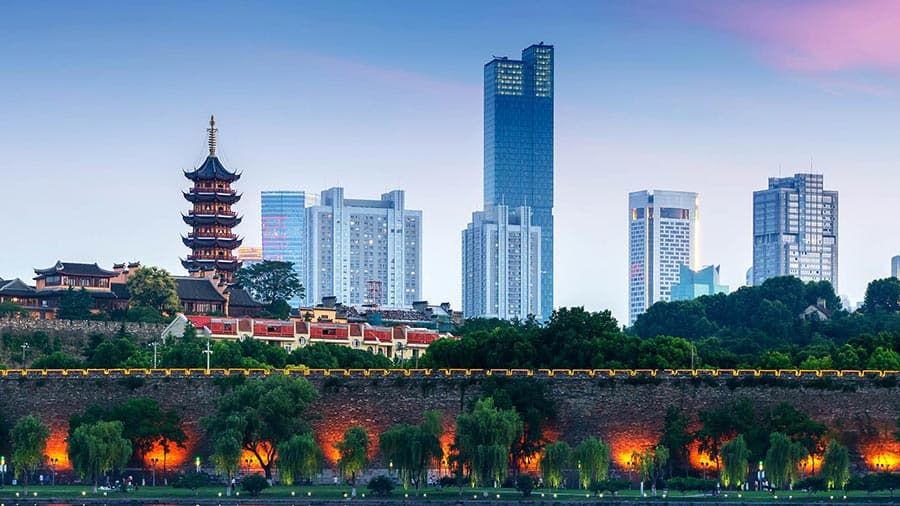
Нанкин — историческая столица Китая с богатым наследием (городская стена, мавзолей Сунь Ятсена, Мемориал жертвам Нанкинской резни, гора Пурпурная). Город сочетает древнюю историю с современным развитием: здесь множество музеев, парков и оживлённых улиц. Для иностранных студентов — комфортные кампусы, высокая безопасность, отличный общественный транспорт (метро, высокоскоростные поезда) и приятная атмосфера. Нанкин находится в провинции Цзянсу — одном из самых богатых и развитых регионов Китая. Климат умеренный континентальный: лето душное и влажное, зима прохладная с возможным снегом — подходит для тех, кто хочет баланса между культурным наследием, экономическим развитием и удобной городской жизнью.