*Disclaimer: Study in Asia is a consulting service.
Study in Asia is your guide to the world of international education. We have compiled a broad catalog of universities around the world, including China, Japan, Korea, and other countries.
Xiamen University is a multidisciplinary educational institution. Choose the direction and study program that are perfect for you.
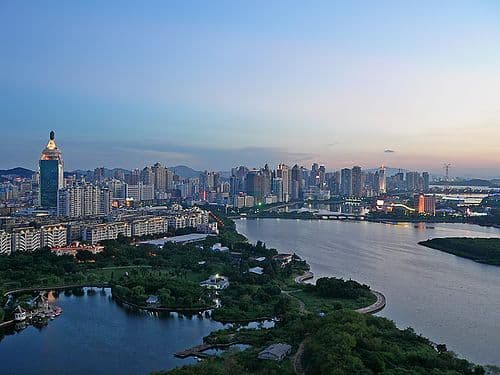
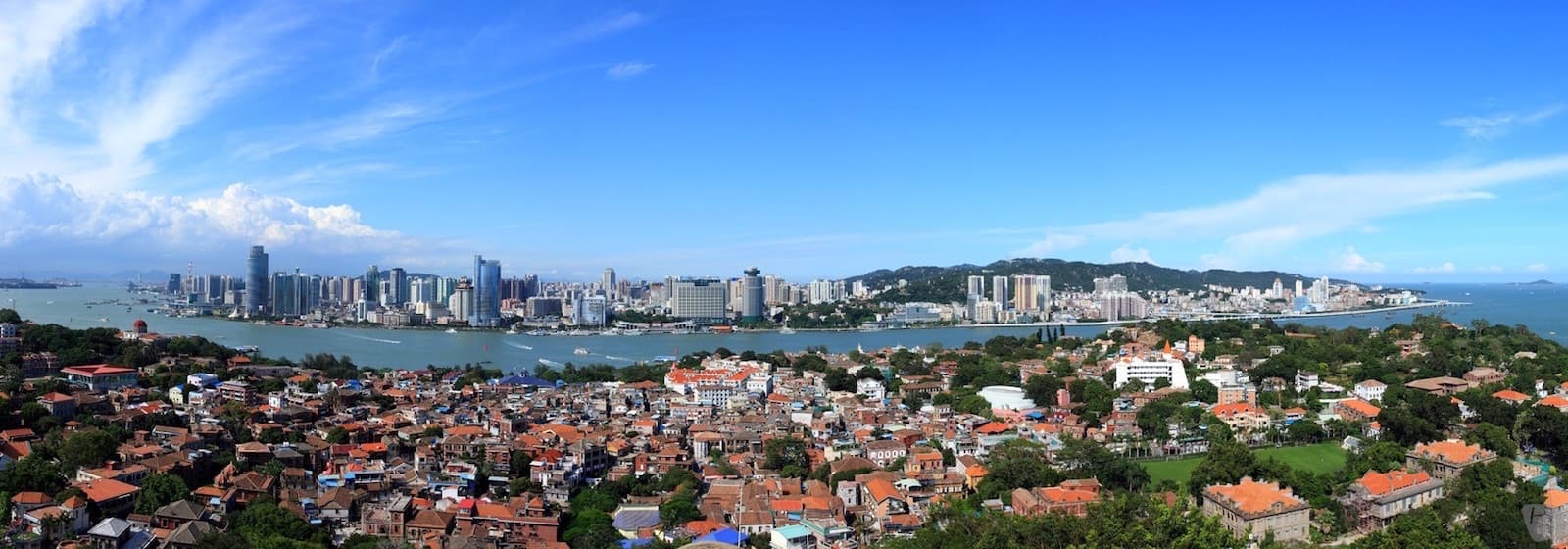
Xiamen University (XMU, 厦门大学) was founded in 1921 by Tan Kah Kee and was the first university in Chinese history founded by an overseas Chinese. Today it is a national key university in the 211, 985 and Double First-Class programmes. Its campus on Xiamen Bay, between the mountains and the sea, is often named one of the most beautiful university campuses in the world.
Programme | Language | Duration | Tuition per year |
|---|---|---|---|
Chinese language courses | Chinese | semester | CNY 26,000 (CNY 13,000 per semester) |
Bachelor's, humanities | Chinese | 4 years | CNY 24,000 |
Bachelor's: science, engineering, medicine, economics, management, law, arts, sports, Chinese language | Chinese | 4–5 years | CNY 26,000 |
Bachelor's: Clinical Medicine (MBBS) | English | 6 years | CNY 38,000 |
Bachelor's: design and digital media art | English | 4 years | CNY 90,000 |
Master's, humanities | Chinese | 3 years | CNY 26,000 |
Master's, other fields | Chinese | 3 years | CNY 30,000 |
Master's in International Chinese Language Education | Chinese | 2 years | CNY 30,000 |
Master's | English | 2 years | CNY 39,000 (humanities), CNY 45,000 (other fields) |
PhD | Chinese | 4 years | CNY 30,000 (humanities), CNY 34,000 (other fields) |
PhD | English | 4 years | CNY 42,000 (humanities), CNY 55,000 (other fields) |
Doctoral students pay tuition only for the first 3 of the 4 years. The application fee is CNY 400 and is non-refundable. Textbooks are paid separately.
Category | Application period |
|---|---|
Chinese Government Scholarship (Type B) | 1 December 2026 — 15 February 2027 |
Fujian Provincial Government Scholarship, XMU Freshman Scholarship | until 10 April 2027 |
Self-funded | until 10 May 2027 |
Chinese language courses, spring semester 2027 | until 30 December 2026 |
Chinese language courses, fall semester 2027 | until 30 June 2027 |
Programmes | Requirement |
|---|---|
Chinese-taught: humanities, social sciences, economics, management, law, arts | HSK 5, 210 or above |
Chinese-taught: science, engineering, medicine, sports | HSK 4, 210 or above |
Bachelor's Chinese for Business / Education / Culture | HSK 3, 180 or above |
English-taught | TOEFL iBT 80 or IELTS Academic 6.0 or above |
Applicants whose previous education was taught in the language of instruction may submit a certificate from their school instead; citizens of English-speaking countries do not need an English certificate. Age: bachelor's 18–30, master's up to 45, PhD up to 50 (as of 1 September of the year of entry); applicants under 18 submit a guardian's guarantee letter.
All bachelor's applicants take the CSCA: mathematics (compulsory), professional Chinese (for Chinese-taught programmes; Chinese language applicants with a valid HSK 4 are exempt), and physics or chemistry for science, engineering, agriculture and medicine. The test language must match the language of instruction.
The historic main campus in Siming District, Xiamen, covers 167 hectares on Xiamen Bay. It houses the humanities and arts, social sciences, natural sciences and engineering divisions, including law, economics, management, chemistry, mathematics and foreign languages, as well as the Jiageng-style buildings dating back to the university's founding.
A large modern campus in Xiang'an District that opened in autumn 2012 and was essentially completed by 2021. It hosts medicine (including the MBBS centre), public health, pharmacy, life sciences, marine and earth sciences, environment and ecology, information science, electronics, energy, aerospace and the College of International Chinese Education, where Chinese language courses are taught.
Founded in 2002 in the Zhangzhou China Merchants Economic and Technological Development Zone, covering 171 hectares. It houses the Institute of Creativity and Innovation (English-taught design programmes), the International College and other innovation platforms.
Approved in 2013, it made XMU the first Chinese university to build an independent overseas campus. Its students come from more than 50 countries and regions, and 5 of its disciplines are in the ESI global top 1%.
Campus | Room type | Price |
|---|---|---|
Siming | double room | CNY 35–65 per day per person |
Xiang'an | suite with four double rooms | CNY 1,600–4,000 per academic year per person |
Zhangzhou | 4-person room | CNY 1,100–1,200 per academic year per person |
Prices exclude water and electricity; the exact rate is stated in the admission notice. Rooms have beds, desks, wardrobes, air conditioning, a water heater, a bathroom (shared within a suite in Xiang'an) and internet (paid by the student); self-service washing machines and dryers are available.
Meals cost about CNY 1,000–1,500 per month. Comprehensive insurance for international students is compulsory and costs CNY 800 per year.
Scholarship | Who can apply | Coverage |
|---|---|---|
Chinese Government Scholarship, Type B (university programme) | bachelor's under 25, master's under 35, PhD under 40; about 50 places; acceptance letter from the school required | free tuition, free dormitory or accommodation subsidy, insurance (CNY 800 per year), CNY 2,500 / 3,000 / 3,500 per month for bachelor's / master's / PhD; for the full study period |
Chinese Government Scholarship, Type A (bilateral) | applies via the sending authority or Chinese embassy, usually January–early April | same coverage as CSC |
MOFCOM scholarship | mid-career professionals from aid-recipient countries, English-taught master's and PhD; apply via the Chinese embassy by the end of May | full scholarship |
China Excellence Scholarship | government officials, senior managers, university and research administrators; apply by mid-April | full scholarship; first year at XMU, thesis completed at home |
Chinese Government Marine Scholarship | students from South China Sea, Indian Ocean and Pacific countries, Africa and the Americas for marine master's and PhD | CSC coverage |
International Chinese Language Teachers Scholarship | bachelor's Chinese for Education and Master's in International Chinese Language Education; recommendation from a Confucius Institute or embassy | per the scholarship rules |
Fujian Provincial Government Scholarship | bachelor's, master's and PhD students; renewable after annual review | CNY 30,000 (bachelor's), 40,000 (master's), 50,000 (PhD) for 1 year |
XMU International Freshman Scholarship | outstanding newly admitted students | tuition waiver; top master's and PhD students also receive a living allowance at CSC rates |
Year | Event |
|---|---|
1921 | Tan Kah Kee founds Xiamen University, the first university in China founded by an overseas Chinese |
1937 | XMU becomes a national university |
2002 | The Zhangzhou Campus is founded |
2012 | The Xiang'an Campus opens in autumn |
2013 | Xiamen University Malaysia is approved, the first independent overseas campus of a Chinese university |
2016 | The research vessel Tan Kah Kee is launched |
2017 | XMU is selected for the national Double First-Class programme |
2019 | The Jiageng-1 rocket is launched |
2021 | XMU celebrates its centenary; construction of the Xiang'an Campus is essentially completed |
2022 | Six disciplines enter China's world-class discipline list |
From 1934, when Tan Kah Kee's business closed, he kept supporting the university, and in 1936 he decided to hand it over to the state. Today XMU is part of the 211, 985 and Double First-Class programmes.
Ranking | Edition | Position |
|---|---|---|
QS World University Rankings | 2027 | =303 |
THE World University Rankings | 2027 | =224 |
ARWU (ShanghaiRanking) | 2026 | 101–150 |
BCUR (ShanghaiRanking), China | 2026 | 25 |
GRAS (ShanghaiRanking): Oceanography | 2026 | 7 |
GRAS (ShanghaiRanking): Chemistry | 2026 | 17 |
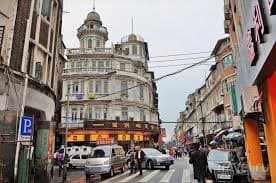
Сямэнь — один из самых приятных прибрежных городов юго-восточного Китая в провинции Фуцзянь. Это современный, чистый и очень «европейски ощущаемый» город с островной частью (Гуланъюй), набережными и мягким климатом. Исторически важный порт и сегодня — центр торговли, туризма и образования.
Для студентов Сямэнь считается одним из лучших городов Китая: хорошие университеты, высокая безопасность, много иностранцев, красивый климат и комфортная городская среда. Минус — более высокая стоимость жизни по сравнению с внутренними городами.